The best online medical assistant degrees are mostly certificate programs that prepare you for the NHA CCMA exam, and the right one depends on your budget and how you like to study. Clinical Skills Institute suits you if you want the lowest price and the fastest finish. Stepful suits you if you want live classes and a fixed schedule. MedCerts suits you if you qualify for military or workforce funding and want exam fees covered. Penn Foster and college programs suit you if you want a school name or a true associate degree. A good pick shows its total cost, says whether the exam fee is included, and gives you a path to hands-on clinical hours.
The hard part is comparing them. Every program advertises a pass rate, most say "accredited," and prices on the five options below range from $900 to $4,000. Terms like "degree," "diploma," and "certificate" get used loosely, so it is easy to pay for the wrong thing.
At Study Abroad Nations we compile and compare online courses, degrees, and certificate programs. This list sets five options side by side using what each program publishes on its own pages. It also explains what accreditation means for medical assistants and what to verify before you pay.
What online medical assistant degrees really are
Most medical assistant degrees online are certificate or diploma programs that take months, not years, and they prepare you for a national exam. A true associate degree exists too, but it is the slower and costlier route. Knowing the difference first keeps you from comparing unlike things.
Degree, diploma, or certificate
The U.S. Bureau of Labor Statistics says medical assistants typically complete a postsecondary program. Certificate and diploma programs usually take about a year or less, and associate degree programs take about two years. The programs below finish in roughly 2 to 7 months, so they are certificates, not degrees. Search phrases like "online degrees for medical assistant" lump them together, but you should not.
An associate degree makes sense if you want college credit toward a later nursing or health science path. If your goal is a first job in a clinic, a certificate plus the CCMA credential gets you there faster.
What accredited means here
Accreditation works on three levels. The school can be state-licensed or institutionally accredited. The program can hold programmatic accreditation from CAAHEP or ABHES. The exam can be accredited, and the NHA’s CCMA exam is accredited by the NCCA.
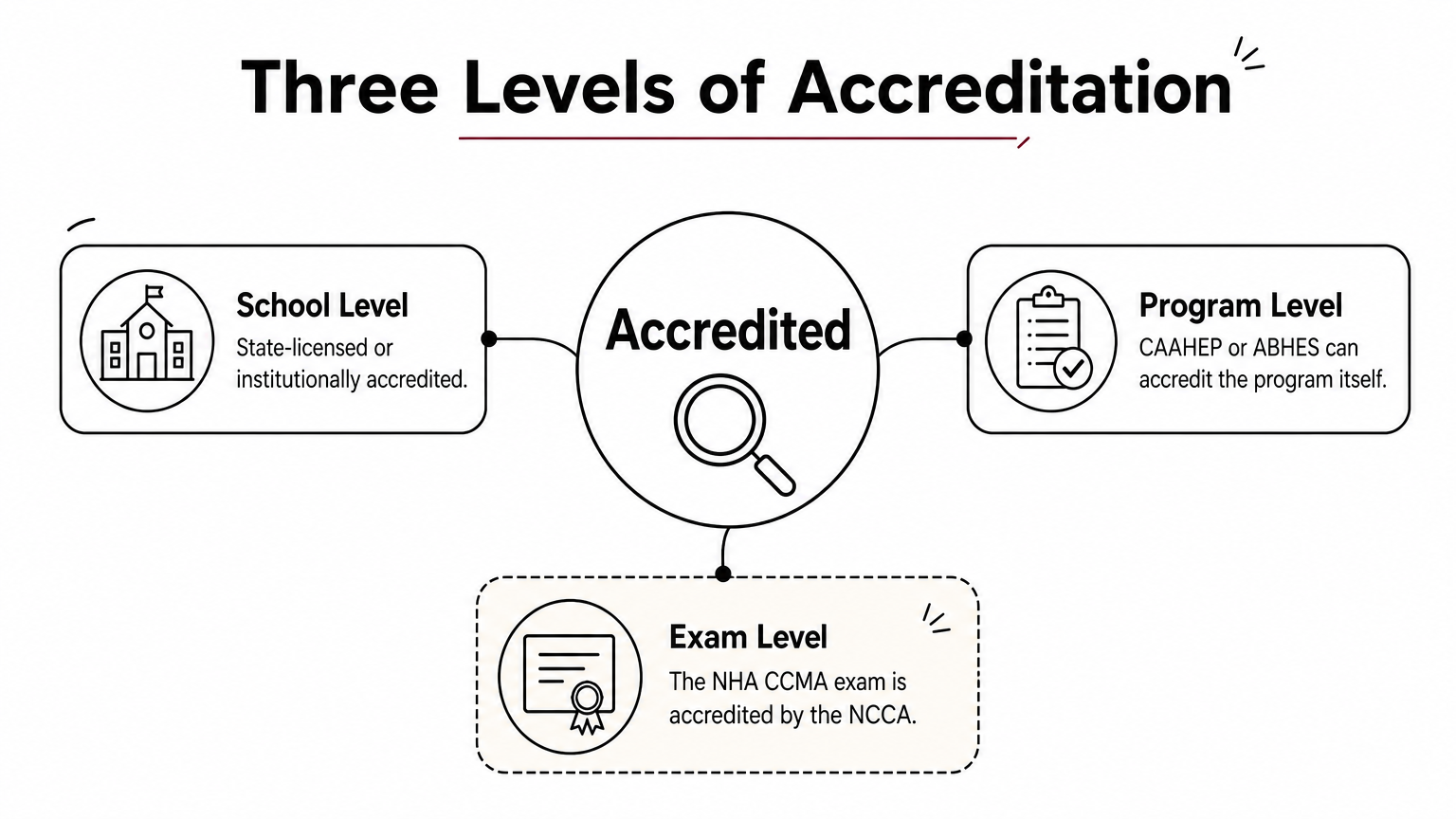
Some online providers are upfront that the school itself is not institutionally accredited while the credential is. The one hard rule involves the other big credential. The AAMA’s CMA exam requires graduating from a CAAHEP- or ABHES-accredited program, so if you want that credential, confirm the program’s status first.
Check which of the three accreditation levels a program claims, because "accredited" alone tells you almost nothing.
1. Clinical Skills Institute
Clinical Skills Institute is the cheapest and fastest of the five. It is a self-paced, 100% online certificate program built around the NHA CCMA exam.
Cost and length
Tuition is $900 total, and the school advertises completion in 8 to 12 weeks, with access for up to 12 months. Paying in full brings the price to $810. Interest-free plans split $900 into 3 payments of $300 or 6 payments of $150.
- The $165 NHA CCMA exam fee is included, along with practice exams and a reference ebook.
- An at-home clinical kit is optional and added after checkout.
- The school lists a 7-day refund window.
Certification prep and clinicals
The CCMA exam has 150 questions in 3 hours, taken online with a live proctor or at a PSI center. The school reports a 97% first-attempt pass rate, but that is its own figure and no outside audit backs it.
Externships of 80 to 160 hours are optional. The school says it places every student through its nationwide network. It describes itself as a state-licensed private postsecondary career school and an NHA-approved provider.
At $900 with the exam fee included, Clinical Skills Institute is the lowest-cost route on this list, but you set your own pace.
Who it suits
You need to be 16 or older with a high school diploma or GED, or on track to finish one within 12 months. It fits cost-conscious self-starters who can keep a study routine alone. It is a poor fit if you need live instructors or deadlines to stay on track.
2. Stepful
Stepful is the structured option, with live classes on a schedule and optional career coaching afterward. It prepares you for the NHA CCMA exam in 5 months.
Cost and length
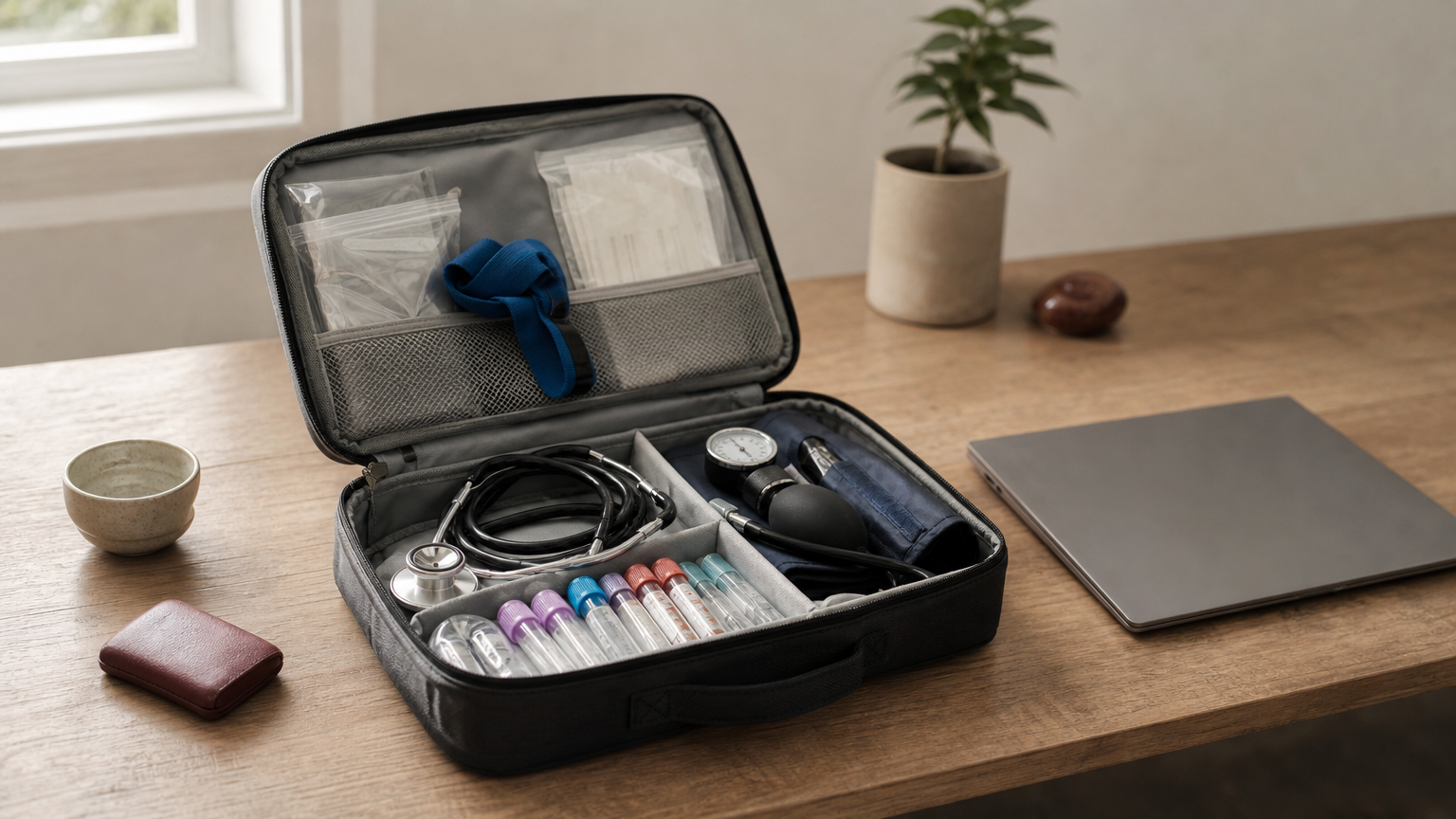
The program runs 5 months, with live 90-minute classes twice a week and about 90 minutes of extra coursework daily. Class times are listed in Eastern time. A free clinical kit with a stethoscope, blood pressure cuff, and phlebotomy supplies ships to your door. Tuition does not appear on the program page, and pricing is state-specific in Stepful’s catalog, so check it before you commit.
- A 3-day money-back guarantee is available.
- Seats are limited and filled first come, first served.
Certification prep and clinicals
Stepful works in partnership with the NHA and reports an 83% CCMA pass rate. It also reports 80 to 160 optional in-person clinical hours through an externship booking platform, plus an 8-week job coaching program with mock interviews.
Stepful trades flexibility for structure, which helps if you tend to stall in self-paced courses.
Who it suits
Externship support requires availability Monday to Friday, 9 to 5. That rules out many people with day jobs. It fits learners who want live teaching and fixed deadlines, and it is a weaker choice if you need to study at midnight.
3. MedCerts
MedCerts is the slower, pricier option, but it covers the exam fees for two credentials. It is built for people using military or workforce funding.
Cost and length
The program takes 28 weeks at 15 to 20 hours of coursework per week, which works out to roughly 420 to 560 hours. The total cost is $4,000, which is $3,100 more than Clinical Skills Institute’s $900. That price includes eBooks, competency assessments, and the national exam fee. Payment options include a Clasp loan, Affirm with APR as low as 0%, or paying in full.
Certification prep and clinicals
You become eligible for both the CCMA and the CMAA, the administrative credential, and MedCerts covers the exam fees. MedCerts says plainly that it is not institutionally accredited, and the accredited part is the NHA certification.
The CCMA exam has no clinical requirement, though some employers prefer an externship. MedCerts provides resources for finding one. Some programs are restricted in certain states, so check its state restriction page first.
Who it suits
Funding is the strongest reason to pick it. MedCerts points to WIOA workforce funding, SpouseWorks (formerly MyCAA), Army and Coast Guard credentialing assistance, and the GI Bill. If you are paying out of pocket, the price gap is hard to justify.
MedCerts makes the most sense when someone else is paying through a military or workforce benefit.
4. Penn Foster
Penn Foster is the option to look at if you want an actual associate degree rather than a certificate. It lists an online medical assistant program that it says can help prepare you for your certification exam.
Cost and length
Penn Foster’s program page is titled as a medical assistant associate degree. Associate degrees generally take about two years of full-time study, though self-paced schools can differ. I could not verify its current tuition or completion time, so confirm both on the program page before comparing it with the certificates above.
Certification prep and clinicals
The page speaks of preparing you for "your certification exam," which does not name a credential. Before you enroll, ask these questions:
- Which exam does it prepare you for: CCMA, CMA (AAMA), or another?
- Is the exam fee included in tuition?
- Is an externship built in, and who arranges it?
- Is the program programmatically accredited by CAAHEP or ABHES?
Who it suits
It suits you if you want college-level credentials for a longer healthcare path. Ask whether credits transfer to the school you may attend later. If your goal is a clinic job within months, a certificate gets you there sooner.
Choose an associate degree only if you want the credits, because it will not get you hired faster than a certificate.
5. College and university programs
Colleges and universities run their own online CCMA training, usually through continuing education or workforce divisions. These programs differ on price and length, so use their pages as a checklist.

Cost and length
Pricing and calendars vary by school, and I would not trust any number that is not on the school’s own page. The programs I found:
- Texas State University runs a 100% online CCMA course with the exam voucher included.
- KCTCS South Central offers online CCMA training with a chance to earn CPR certification and HIPAA training.
- Santa Monica College offers a 100% online course that prepares you for the NHA CCMA exam.
- Emory University offers an online clinical medical assistant certification course that prepares you for national certification.
- Old Dominion University runs an online medical assistant program that builds clinical skills and prepares you for certification.
Certification prep and clinicals
All five prepare you for national certification, and most target the NHA CCMA. Texas State’s included voucher saves you the exam fee, which others charge on top. Ask each school whether it arranges externships, because the pages I reviewed do not promise placement.
Who it suits
It fits you if a university name matters to you or you prefer a cohort with set start dates. Add-ons like KCTCS’s CPR and HIPAA training can help your résumé. Expect higher prices than Clinical Skills Institute, and compare each tuition to the programs above.
Treat a college program as a premium for the brand and structure, and check that the exam voucher is actually included.
How to choose among these programs
Pick on three things in this order: whether the credential fits your goal, the total price including the exam, and whether you can finish at your pace. Other details matter less.
Side-by-side comparison
| Program | Length | Total cost | Exam fee | Clinical hours |
|---|---|---|---|---|
| Clinical Skills Institute | 8 to 12 weeks | $900 ($810 paid in full) | Included ($165) | Optional, 80 to 160 |
| Stepful | 5 months | See catalog | Confirm | Optional, 80 to 160 |
| MedCerts | 28 weeks | $4,000 | Included | Not required for exam |
| Penn Foster | Confirm | Confirm | Confirm | Confirm |
| College programs | Varies | Varies | Texas State includes voucher | Confirm |
Quick answers to common questions
The quickest program on this list is Clinical Skills Institute at 8 to 12 weeks as advertised, and the slowest certificate is MedCerts at 28 weeks. An online certificate is valid when the credential is, and the CCMA exam is NCCA-accredited. Employers still look at the credential and your skills first. CCMA is not a separate job from medical assistant. It is a credential, and pay depends on your employer and role.
Questions to ask before you pay
Ask what the total cost is with the exam fee, whether you must be certified to be hired locally, and which accreditor backs the program. Ask who arranges your externship and what happens if no site is near you. Then read the refund policy, because windows range from 3 to 7 days on the pages above.
Picking your program
If you want the cheapest and fastest route, Clinical Skills Institute fits. If you need live structure, pick Stepful. If military or workforce funding is paying, MedCerts makes sense. If you want a degree or a college name, look at Penn Foster or a university program. Confirm the exam fee, the accreditation level, and the externship plan before you pay anything.
Medical assistant training is one of many credentials worth comparing before you commit. For more side-by-side breakdowns of online degrees, certificates, and free courses, browse the comparisons at Study Abroad Nations.