The best short certificate programs that pay well are the ones tied to a specific job, with a clear credential at the end and a total cost you can verify. Based on national median pay, wind turbine technician, HVAC technician, and commercial truck driver lead the list. Medical coding and bookkeeping suit you if you want to study online. Phlebotomy and pharmacy technician training suit you if you want healthcare work in under eight months.
The hard part is that "short" and "pays well" rarely describe the same program for the same person. Course length does not include prerequisites, clinical hours, exams, or licensing. Pay figures are usually occupation medians, not what a new graduate earns. This article gives seven options in order of median pay, with the length, format, cost, and remaining steps for each.
At Study Abroad Nations we compare online courses, certificates, and degrees, and the same rule applies here: check what a credential actually unlocks before you pay. Every pay figure below is a national median for the occupation, not a promise. A later section shows how to match a program to the time you have and how to verify it.
1. Wind turbine technician
Wind turbine technician has the highest median pay on this list, about $64,120 a year, and it can be trained in roughly seven months. It is also the most physically demanding option, and it has no real online route.

How the program works
One published example is a seven-month, 720-clock-hour program at a single technical institute campus. Treat that as one school’s schedule, not a national standard. Entry-level service work still involves long on-the-job training, so the course is a starting point rather than full qualification.
Many employers also ask for Global Wind Organisation safety training. Basic Safety Training and Basic Technical Training are separate modules, so ask which ones your target employer requires and whether the school’s course includes them.
Who it suits
This path suits you if you are comfortable with heights, confined spaces, and irregular schedules. Many jobs involve travel, so ask about base pay, guaranteed hours, lodging, and travel allowances in writing. Treat per diem as an expense allowance, not extra savings.
A high median pay figure means little until you know the travel schedule and who pays for safety training.
Cost and pay
The $64,120 figure is the median for all wind technicians, not starting pay. Tuition varies widely, and private technical institutes often cost far more than community college programs. Request an itemized quote and compare at least two schools before you commit.
2. HVAC technician
HVAC technician pays a median of about $61,010 a year, and programs run from six months to two years, according to the Bureau of Labor Statistics. For a short certificate that pays well, it is the most widely available trade route.
How the program works
Some schools list nine- or ten-month certificate routes, so a "six-month" label is not universal. Check the real schedule, lab hours, and whether the length applies to your shift. Most of the learning happens in a lab, which means online-only HVAC offers are a warning sign.
Many programs prepare you for EPA Section 608 certification, which is required to handle refrigerants. It is not a general HVAC license. State and local rules may add steps, so ask your licensing authority what a new graduate may legally do.
Who it suits
HVAC suits people who like troubleshooting and don’t mind attics, crawl spaces, and rooftops. Expect employer training after school. A certificate does not prepare you to diagnose every system or run your own contracting business.
A certificate gets you hired as a helper. It does not make you a finished technician.
Cost and pay
Trade programs commonly cost several thousand dollars and can reach about $10,000 or more, depending on the school. Ask whether the EPA exam fee, tools, and uniforms are included. The median is not a first-year rate, so compare it with real entry-level postings near you.
3. CDL truck driver training
CDL training is the fastest route here, and the median pay for heavy truck drivers is about $58,640 a year. One community college lists a four-week, 160-hour Class A course. Other schools run several weeks to about three months.
How the program works
First-time Class A applicants subject to federal entry-level driver training rules must complete training with a provider listed on the FMCSA Training Provider Registry before the skills test. The commercial learner’s permit generally must be held for at least 14 days before that test. Completing school does not give you the license itself.
Plan for prerequisites that sit outside the course calendar. Examples include a driver license, the permit, and a medical exam and drug screening.
Who it suits
CDL training suits you if you want the quickest path to a paycheck and can handle time away from home. The four-week example runs full days, Monday through Friday, which makes keeping a job hard. Compare mileage or hourly pay, paid waiting time, and typical work availability, not only the median.
The course is four weeks, but the permit, tests, and employer training add more time.
Cost and pay
That same college lists $4,500 including the DOT physical and drug test, but not permit, permit-test, or license fees. If an employer sponsors your training, read the repayment contract first. Check the length, the amount owed if you leave early, and whether training time is paid.
4. Medical coding specialist
Medical coding is the strongest online option on this list for healthcare-adjacent work, with programs typically running three to six months. Published medians for medical records specialists land near $48,800 a year, and sources vary.
How the program works
You learn medical terminology, anatomy, coding systems, and healthcare documentation. Coders assign standardized codes used for billing and insurance reimbursement. Many graduates then sit for the Certified Professional Coder (CPC) exam from the American Academy of Professional Coders.
Coding is mostly screen work, so a fully online course is realistic. Ask whether the program includes exam preparation, practice coding, and an externship or job-search support. A course that only teaches theory leaves you to bridge the experience gap yourself.
Who it suits
This path suits detail-oriented people who prefer desk work to patient contact. Remote roles exist, but don’t count on one for your first job. Many employers prefer a credential plus some experience.
Coding is a good online fit, but the exam credential matters more than the certificate.
Cost and pay
Costs vary by school, so ask whether the exam fee and code books are included. Entry-level pay sits below the senior coder averages that some sites quote, so check local postings for what beginners earn.
5. Bookkeeper
Bookkeeping is one of the cheapest and most flexible short online options, usually about six months, with a median pay near $47,440 a year. It pays less than the trades but costs less to enter.
How the program works
Programs teach payroll, accounts payable and receivable, bank reconciliations, financial reports, and accounting software. Bookkeeping itself usually doesn’t require a state license. Employers look for software skills and demonstrated accuracy.
Business and administrative certificates often cost roughly $500 to $3,000, which is low next to hands-on programs. The tradeoff is thinner networking. Look for projects using real accounting software and a school that helps with job placement or freelance starts.
Who it suits
Bookkeeping suits you if you like numbers, want remote or freelance flexibility, or need to keep working while you study. It also works as a first step toward accounting certifications later.
Bookkeeping is the cheapest route here, but it only pays well if you build software skills and experience.
Cost and pay
Because the median is modest, the strongest return comes from low tuition and fast job entry. Ask whether the price includes software access, since some providers charge for it separately.
6. Phlebotomy technician
Phlebotomy is among the quickest healthcare certificates, often about 12 weeks, with a median pay of about $45,230 a year. It is a good fit for short certificate programs that pay well if you want patient-facing work fast.
How the program works
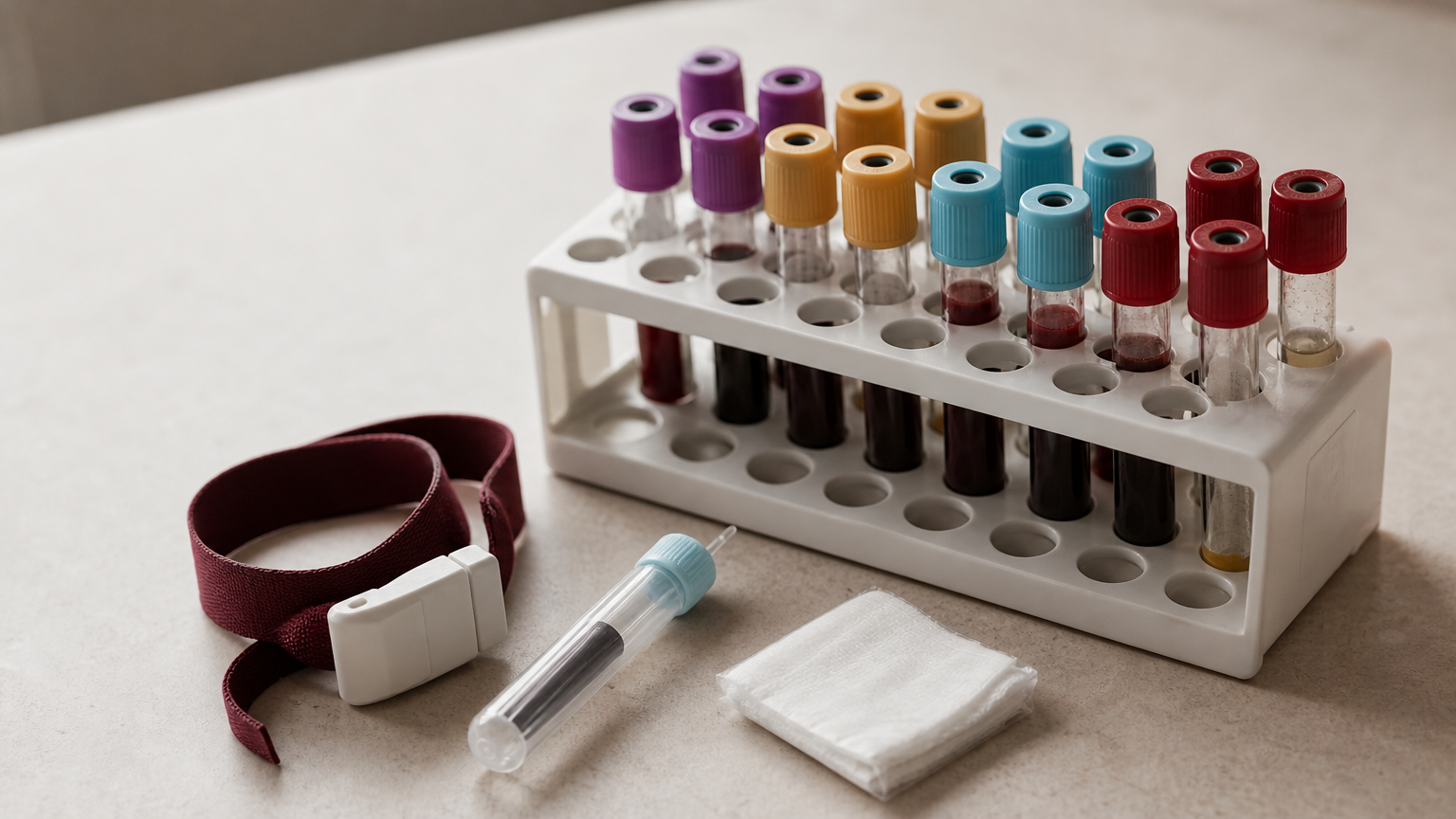
You learn blood collection, specimen handling, and patient identification. One community college lists 12 instructional weeks and 200 contact hours. A private school lists 12 weeks with a one-week externship.
Check where you will practice on real people and who arranges it. For the National Healthcareer Association’s certification route, you must document at least 30 venipunctures and 10 capillary sticks on live individuals. A few states, including California, require a state credential on top.
Who it suits
Phlebotomy suits people who stay calm with anxious patients and want to enter healthcare without a long program. Online theory exists, but live procedures cannot be learned online.
Any phlebotomy course that skips live practice will not get you hired.
Cost and pay
Published costs vary widely. One community college lists $875 tuition including the exam, and a private school lists $4,250 plus $721 for books and supplies, or $4,971. These are two different programs in different markets, not a price range.
7. Pharmacy technician
Pharmacy technician is the lowest-paying option here, with published figures from about $40,300 to $47,000 a year. It earns a place because programs run four to eight months and the jobs are plentiful in retail, hospital, and long-term care pharmacies.
How the program works
Students learn pharmacy law, prescription processing, medication safety, dosage calculations, and insurance procedures. Some states require certification through the Pharmacy Technician Certification Exam, or state registration, before you can work. Rules differ, so check your state board before enrolling.
Many programs are hybrid, with online coursework plus an in-person externship. Confirm who arranges the externship placement and whether the hours count toward your state’s requirements.
Who it suits
This path suits you if you want steady healthcare-adjacent work without drawing blood or lifting patients. It also suits people who want to move into pharmacy later. If maximum pay is your goal, choose one of the first three options.
Pharmacy technician is a stable entry point, not the highest-paying shortcut.
Cost and pay
Costs vary by school and format, so request an itemized quote including the exam, background check, and books. Compare a local employer’s entry-level offer with your current pay before you decide.
How to choose and verify a short certificate
Choose by the time you have, the work you can physically and legally do, and the full cost of getting there. Course length alone never settles the question. No program here reaches $10,000 a month, because the highest median, wind turbine at $64,120, works out to about $5,343 a month.
Match the program to your timeline
The table shows how each option fits a time window. If you have 12 months, none of these needs that long, so use the extra time for exam prep, a part-time job, or a longer HVAC route.
| Time you have | Programs that fit | Typical format | Median pay |
|---|---|---|---|
| 4 weeks to 3 months | CDL training, phlebotomy | In person | $58,640 / $45,230 |
| 3 to 6 months | Medical coding, bookkeeping | Online | about $48,800 / $47,440 |
| 4 to 8 months | Pharmacy technician | Hybrid | about $40,300 |
| 6 to 10 months | HVAC, wind turbine | In person | $61,010 / $64,120 |
Fast programs hide steps that fall outside the class calendar, such as permits, externships, and exams. Count the calendar weeks through testing, not only instructional weeks.
Count the total cost
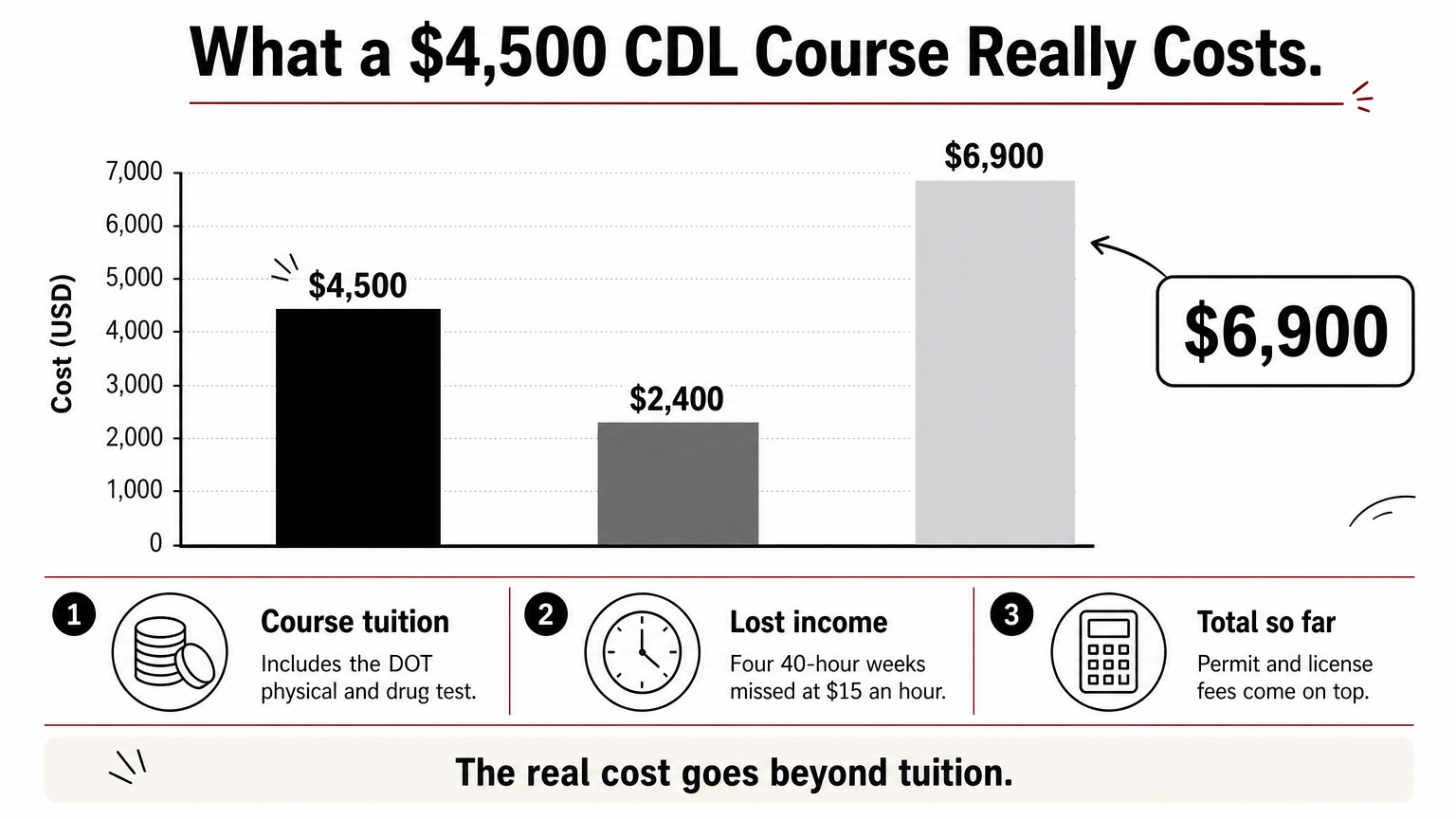
Add tuition, fees, tools, exams, and the income you lose during class. As a hypothetical example, take a CDL course at $4,500. If you earn $15 an hour and miss four 40-hour weeks, you lose $2,400. The total is $6,900 before permit and license fees. Compare that with local entry-level offers, not the national median.
Online learning cuts commuting and fits a job, but it only replaces theory. Labs, driving, and live-patient procedures stay in person.
Verify before you pay
Ask every school these questions and request answers in writing:
- Which credential does the program award, and is it accepted in my state?
- Who arranges the externship, clinical hours, or driving practice?
- Which exams and licenses remain after completion?
- What is the total price, including fees, exams, and refund terms?
- What are the program’s completion, exam pass, and job placement rates?
If you are not a U.S. resident, also confirm that your immigration status allows you to enroll and work in the field.
Pick one program and verify it
The best short certificate is the one that fits your timeline, your body, and your budget, and that leads to a credential employers in your area accept. Wind turbine, HVAC, and CDL training pay the most. Coding and bookkeeping offer the most online flexibility. Phlebotomy and pharmacy technician training are the quickest healthcare entries. Whichever you choose, check the full cost and the steps after graduation before you pay.
If you want more comparisons of online courses, certificates, and degrees, browse Study Abroad Nations and shortlist two programs to compare in writing.