The best radiologic technologist certificate programs share three traits: JRCERT accreditation, supervised clinical training built into the schedule, and a graduation path that makes you eligible for the ARRT exam. Hospital-based and university certificates suit people who want to become full radiographers. Hybrid programs suit people who need flexible coursework. Limited-scope programs suit anyone who wants to start x-ray work fast. Advanced certificates suit working techs who want to add radiation therapy or MRI.
The problem is that search results blur these paths together. You will see accredited two-year programs next to eight-month limited-license courses, and "online" claims that hide in-person clinical requirements. Each path leads to a different job, a different license status, and a different ceiling.
This article sorts the five main program types and checks each one the same way: how it works, how long it takes, who can enter, and who it suits. At Study Abroad Nations we compare certificates, degrees and online courses. Tuition varies widely, so confirm costs on each program’s own page.
1. Hospital-based radiography certificate
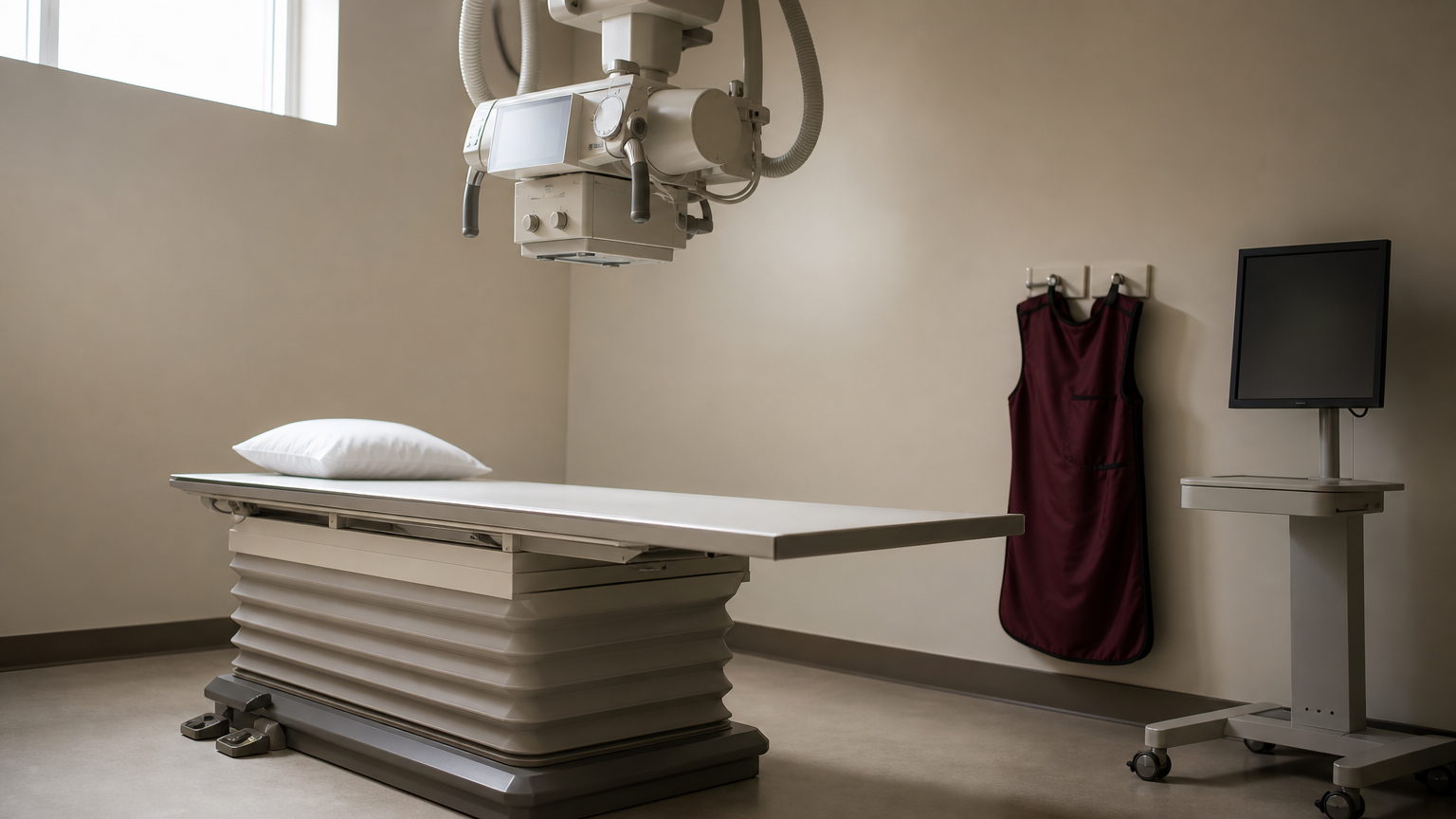
A hospital-based certificate is the classic route to becoming an ARRT-certified radiographer. A health system runs the program and puts you in the imaging department early.
How it works
You study positioning, radiation physics, anatomy and patient care while performing supervised exams on real patients. Strong programs hold JRCERT accreditation, which is what makes graduates eligible for the ARRT radiography exam. You can search accredited programs by type and by certificate or associate degree in the JRCERT program directory.
Accreditation decides whether a certificate leads to the ARRT exam, so check it before anything else.
Length and eligibility
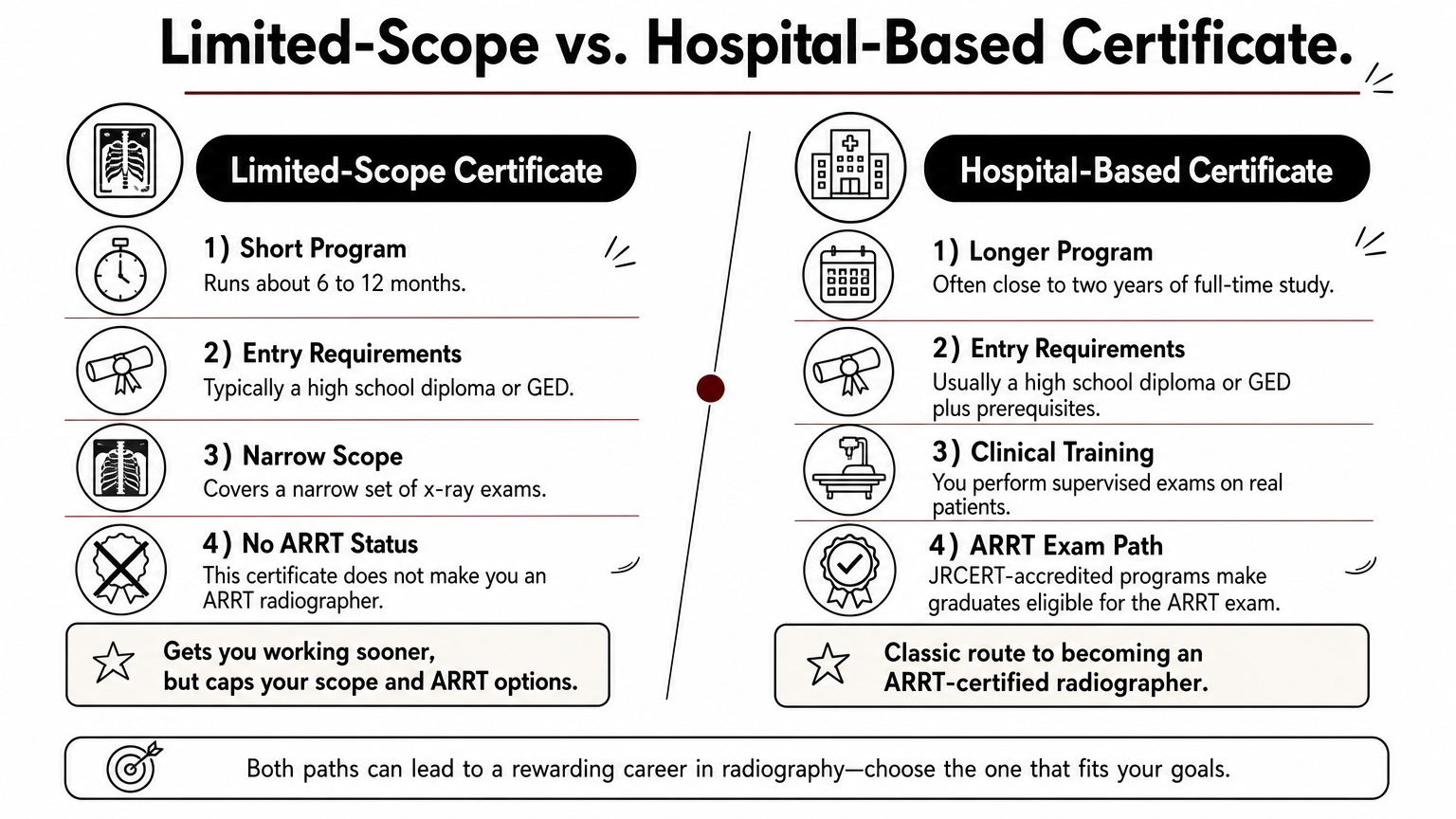
- Length: often close to two years of full-time study.
- Entry: usually a high school diploma or GED plus prerequisites such as anatomy and college math.
- ARRT note: ARRT requires an associate degree or higher, in any subject, to earn the credential. Ask whether the hospital partners with a college.
Who it suits
You learn best by doing, you can commit to full weekdays, and you want a hospital as your first employer. It fits school leavers and career changers without a prior degree.
2. University certificate for degree holders
A university certificate in radiography is a shorter route for people who already hold a degree. It skips general education and focuses on imaging coursework and clinical rotations.
How it works
You complete radiography classes and clinical education at a university medical center. Some programs run about 19 months and state that graduates meet the educational requirement for ARRT. Because you arrive with a degree, you also satisfy the ARRT degree rule without extra college work.
Length and eligibility
- Length: roughly 12 to 24 months depending on the school.
- Entry: often a bachelor’s degree or specific science prerequisites, plus observation hours or an interview.
- Competition: seats are limited, so apply early and confirm deadlines.
Who it suits
A career changer with an unrelated bachelor’s degree gets the most from this path. Skip general education and head straight to the ARRT exam. If you studied abroad, ask admissions how they evaluate foreign credentials.
If you already have a degree, a university certificate is usually the shortest route to full ARRT eligibility.
3. Hybrid radiologic technology certificate
A hybrid program delivers coursework online and runs clinical training at a hospital or imaging site near you. It is the closest thing to "online" that still qualifies you for ARRT.

How it works
Lectures on anatomy, physics and radiation safety happen on your schedule, while clinical hours happen in person. A fully online radiography program cannot exist, because you must perform exams on patients under supervision. Treat any program that promises 100% online training with caution until you see its clinical placement rules.
Length and eligibility
- Length: usually similar to on-campus versions, around 18 to 24 months.
- Entry: the same prerequisites as campus programs.
- Ask first: whether the school arranges your clinical site or expects you to find one.
Who it suits
You live far from a campus, you work part time, or you have family duties. Check that the program holds JRCERT accreditation, or you may lose the ARRT path.
Online lectures are fine, but the clinical hours are what make you a technologist.
4. Limited-scope x-ray technician certificate
A limited-scope certificate trains you to perform a narrow set of x-ray exams, such as chest or extremity imaging. It is the fastest way to start working as an x-ray technician or limited radiology tech.
How it works
Programs cover basic anatomy, positioning and radiation safety, with a short clinical component. States set the rules, and some restrict or do not offer limited licenses. This certificate does not make you an ARRT radiographer, and the scope of work is narrower than a full rad tech’s.
Length and eligibility
- Length: about 6 to 12 months. One fast-track program runs 8 months.
- Entry: typically a high school diploma or GED.
- Before you enroll: read your state radiologic licensing board’s rules and the job postings near you.
Who it suits
You want entry-level work in urgent care, clinics or physician offices quickly. If you may want hospital work later, plan on a full accredited program afterward, since limited coursework may not transfer.
A limited-scope certificate gets you working sooner, but it caps your scope and your ARRT options.
5. Advanced certificate in radiation therapy or MRI
Advanced certificates are for people who already work in imaging and want a second specialty. JRCERT accredits radiography, radiation therapy, magnetic resonance and medical dosimetry programs.
How it works
These programs build on your radiography background. A radiation therapy certificate covers treatment planning, dose delivery and patient care during cancer treatment. An MRI certificate covers magnet safety, scan protocols and image quality. Both include clinical rotations.
Length and eligibility
- Length: radiation therapy certificates typically run about 12 months, MRI programs vary by school.
- Entry: usually radiography certification or equivalent education.
- ARRT: each specialty has its own ARRT credential, which you pursue after completing an accepted program.
Who it suits
A working tech who wants higher pay potential, more varied work, or a move into oncology or advanced imaging. Beginners should start with paths 1 through 3.
A second credential adds value only after the first one is in place.
Where to start
Start with your goal. If you want to be a fully certified radiographer, pick path 1, 2 or 3 and confirm JRCERT accreditation, clinical placement and the ARRT degree rule before you apply. If you want to start x-ray work quickly, check your state’s limited-license rules first, then compare path 4 programs. If you already work in imaging, path 5 is your next step.
For more comparisons of certificates, degrees and online courses, browse Study Abroad Nations and build your shortlist with the same checks.